Sharma Lab
How do mechanics, development, and function interact to produce the vast diversity of animal and plant forms? We study how physical and mechanical constraints on development shape form over developmental timescales, and how the same constraints on function shape form over evolutionary timescales.
Research
We work on a wide range of problems that examine how mechanics and behaviour shape motor behaviour, morphology, and morphogenesis across animal forms. We combine mathematical and computational machinery with embryological and experimental approaches. The applications of our work include rehabilitation, biologically inspired robotics, and prosthetics. Some example projects are discussed below:
Stability as a governing principle of animal morphology and function
Mechanical stability, rather than maximum force output, governs how animals move, grasp, and are shaped. We showed that finger-contact geometry and passive muscle impedance set fundamental limits on fingertip force in precision grips, and that passive viscoelastic properties of sarcomeres can stabilize mechanical linkages without active neural control.
Development and evolution of synovial joints in vertebrates
Using comparative histology, micro-CT imaging, and phylogenetics, we traced the evolutionary origin of synovial joints, which are the lubricated articulations critical for vertebrate locomotion, to the last common ancestor of jawed vertebrates, and studied the co-evolution of vertebrate teeth and sensory exoskeletons. Our next steps are to understand how joints develop their unique joint surface shapes.
Allometric scaling and body form of terrestrial animals
We developed theoretical models showing that the lateral stability of terrestrial locomotion imposes predictable constraints on animal body proportions across body sizes, from insects to elephants.
Origin of tetrapod locomotion: the hip of Tiktaalik roseae
A collaborative study of the pelvic girdle of Tiktaalik roseae, the Devonian fish that bridges the fish-to-land transition, offering new evidence on how pelvic anatomy reorganized to support weight-bearing at the water-land transition.
News
The lab is now recruiting. See the Join Us section below for open PhD and postdoc routes.
Discussed "Why do our knuckles crack?" on the ScienceStuff podcast with Jorge Cham.
New work on the relationship between terrain unevenness and animal frontal shape is now available as a preprint. [Link]
Our study on the evolutionary origins of synovial joints was covered by Phys.Org and Science.org.
Neelima Sharma
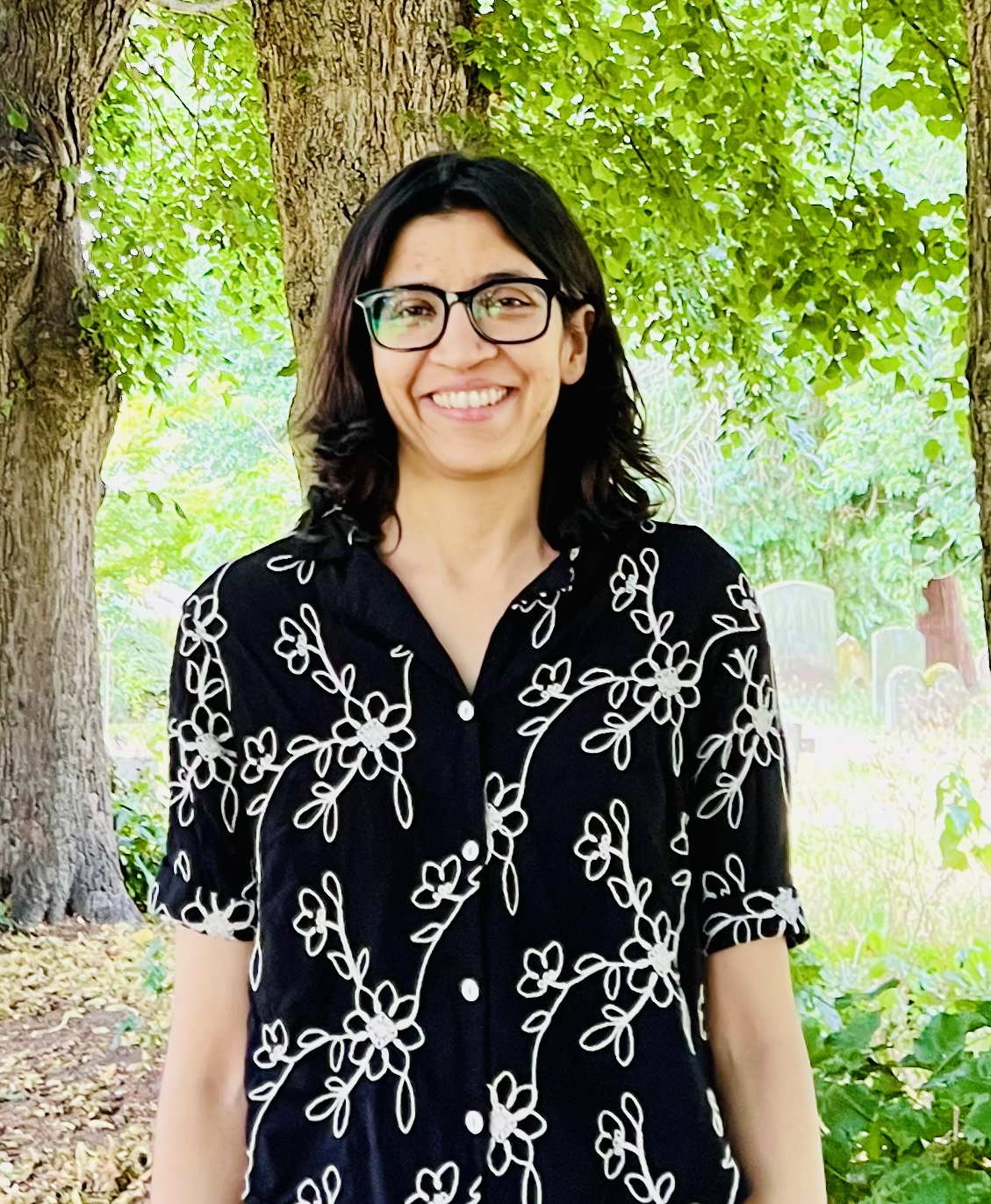
Dept. of Cell & Developmental Biology, University College London
Neelima is interested in unravelling the role of mechanics in the function, development, and evolution of biological systems. The interdisciplinary nature of these questions calls for theoretical tools from dynamical systems, optimal control, differential geometry, and continuum mechanics, alongside experimental approaches from developmental biology, embryology, and biomechanics. Her previous work has helped understand the role of mechanical stability in determining animal morphology and motor control, as well as in shaping morphogenesis and function of the vertebrate musculoskeletal system.
Join us
We are a new lab and welcome you to reach out to neelima.sharma@ucl.ac.uk with a CV and research interests to discuss potential opportunities. As an interdisciplinary lab, our research demands a strong interest in biology, enthusiasm for wet-lab experiments, and expertise in applied mathematics and mechanics.
PhD routes
Press, blogs & talks
Press
- Artist-in-Residence inspired by research illustrations to imagine new sea creatures — UCL News
- Humans have the earliest jawed fish to thank for their flexible joints, study suggests — Phys.Org
- Flexible joints evolved as jawed fish began life as predators — UChicago News
- Where do elbows and knees come from? — Science.org
- Getting a grip on hand function — Medical Xpress
Blog
Podcast
- Why do our knuckles crack? — with Jorge Cham, ScienceStuff (iHeartRadio)